
Today is St. Patrick’s Day, and I’ve got to tell you, this one has always meant something to me.
Now I know what some of you are thinking.
“Mangiacotti? Joe, since when are you Irish?”
Fair question.
But on my mother’s side, it’s O’Leary. So trust me, there was plenty of Irish in my house growing up. My parents loved Ireland. They went often. They adored a lovely cottage in Lady’s Bridge, County Cork, and I’ll never forget what Ireland did for my father. In his later years, his health wasn’t great, his breathing could be tough, but every time he got over there, something changed. The air, the weather, the pace of life — it was like Ireland reached down, cleared out his lungs, and gave him ten years back.
That leaves an impression on you.
And in our house, Irish music wasn’t some seasonal gimmick you pulled out one day a year. No, Irish music was part of the wallpaper. It was always playing in the living room. So when St. Patrick’s Day came around and my sisters and I were with our friends, we knew all the words to the songs blaring out. Every one of them. And our friends would look at us like, “What in the world is going on here?”
That was just the way we grew up.
And that’s why I think St. Patrick’s Day matters.
Yes, it’s fun.
Yes, it’s festive.
Yes, it’s green shirts, green ties, corned beef, a pint, a parade, a song, and a smile.
But it’s more than that.
It’s about heritage.
It’s about family.
It’s about memory.
It’s about faith.
It’s about the immigrant story.
It’s about a people who came here, got knocked around, got looked down on, got told they didn’t belong — and then built communities, built churches, built neighborhoods, built police and fire departments, built businesses, built unions, built politics, and helped build America.
That’s the real story.
Now here’s one of those historical facts people love to get wrong. Everybody assumes the oldest St. Patrick’s Day parade in America was Boston or New York. Nope. The oldest recorded one was in St. Augustine, Florida, in 1601. Boston came later, in 1737, and New York after that in 1762.
So yes, Boston is old.
Yes, Boston is iconic.
Yes, Boston does it big.
But it wasn’t first.
That said, let’s be honest: when it comes to Irish-America, Boston is one of the capitals.
And Boston didn’t just celebrate the Irish. Boston was shaped by the Irish.
The Irish in Boston figured something out very early — probably earlier than almost anybody else in urban America. They figured out that if you want real power, you’d better understand the ballot box. Not just the parade route. Not just the parish. Not just the neighborhood tavern. The ballot box.
The Irish learned how votes become influence.
How influence becomes organization.
How organization becomes power.
And that’s where the ward bosses came in.
Boston politics for generations was driven by Irish organization — block by block, precinct by precinct, ward by ward. The Irish understood loyalty, turnout, relationships, favors, neighborhoods, and machine politics better than just about anybody. They didn’t just participate in Boston politics — they mastered it.
And for a very long time, if you wanted to understand Boston, you had to understand Irish political power.
The Irish did not merely enter the system.
They learned how to run it.
And here’s a piece of history that tells you everything you need to know: it took Boston roughly 350 years to get its first Italian mayor, Tom Menino.
Think about that.
Boston had wave after wave of immigrants. Italians everywhere. Great Italian families. Great neighborhoods. A massive contribution to the city. And still — it took three and a half centuries before an Italian broke through and became mayor.
Why?
Because the Irish political structure in Boston was that strong. That deep. That entrenched. That effective.
That is not a criticism.
That is not a complaint.
That is history.
The Irish found power early, and once they had it, they knew how to keep it.
And today, you still see the cultural footprint everywhere — especially here in Massachusetts.
In Boston, the St. Patrick’s Day celebration is tied to Evacuation Day, marking the withdrawal of British troops on March 17, 1776. And isn’t that just perfect? Irish pride and American independence, all wrapped together in one Boston tradition.
And here in Worcester, this is no small-town side note. The Worcester St. Patrick’s Parade is a major event. Huge turnout. Huge community support. Huge impact on Park Avenue businesses, restaurants, bars, families, vendors — the whole local economy gets a lift.
And that’s another point that matters.
St. Patrick’s Day is not just emotional.
It is economic.
This day means money. Real money.
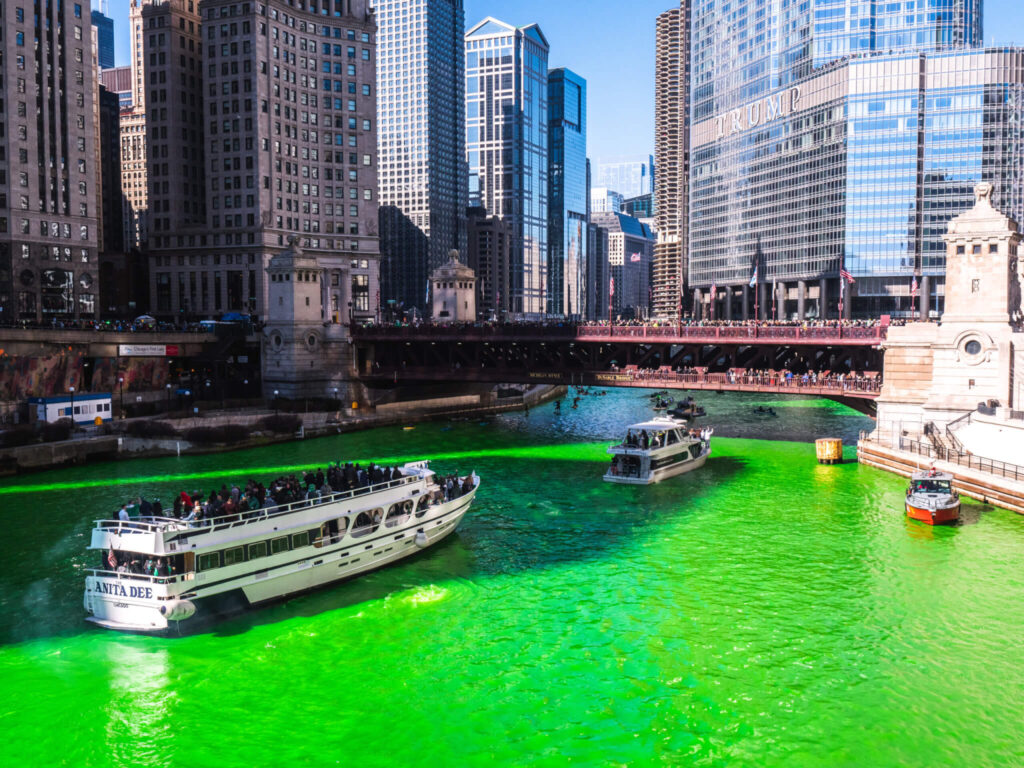
Parades mean security, vendors, tourism, food, drinks, hotel bookings, retail traffic, road race registrations, family outings, restaurant sales, and packed streets. Chicago dyes the river green. Boston turns out in force. Worcester turns out in force. The whole country leans into this day because it is one of those rare cultural holidays that is both deeply personal and broadly commercial.
And let’s talk about the Irish footprint worldwide.
There are more people claiming Irish heritage in America than there are people living in Ireland today. Let that sink in. The Irish diaspora is enormous. The Irish influence is global. And in places like Boston, that influence isn’t symbolic — it’s woven into the DNA of the place.
You hear it in the music.
You see it in the neighborhoods.
You feel it in the politics.
You see it in the churches.
You see it in the family names.
And you see it every single year when St. Patrick’s Day rolls around and this region doesn’t just acknowledge it — it owns it.
So for me, this day is personal.
It takes me back to my parents.
It takes me back to County Cork.
It takes me back to the music in the living room.
It takes me back to those bewildered looks from friends when my sisters and I knew every word to every Irish song.
And it reminds me that heritage matters.
Not because you live in the past.
But because the past built you.
The Irish brought grit.
They brought humor.
They brought music.
They brought faith.
They brought family.
They brought toughness.
And in Boston, they brought a political playbook that changed the city forever.
So today, enjoy the parade.
Enjoy the songs.
Enjoy the laughter.
Enjoy the celebration.
But remember what you’re really looking at.
You’re looking at the story of a people who came here with very little, took a lot of hits, refused to quit, learned the system, built power, built community, and left a mark on America that is still impossible to miss.
That is the Irish story.
That is the Boston story.
And around here, that’s still worth celebrating.
Happy St. Patrick’s Day.